Perimenopause Part 1: I Wasn’t Okay – And No One Could Tell Me Why
About a year and a half ago, I started to feel off. There wasn’t anything specific I could put my finger on, but I’m very in tune with my body, and I knew something wasn’t quite right. I went to my general practitioner and he ran a standard blood panel. Everything came back “within normal range,” so naturally his explanation was stress. Shocker. But there was one small issue with that — I was not stressed. So I was already planning my next move before I even left the appointment because if you know me, I don’t stop until I find answers. And honestly, isn’t it wild that you have to go to your GP first, even though it’s usually a waste of time and money? (enter frustration with healthcare and an eye roll here)
My next stop was a functional medicine practitioner. He was wonderful — truly. Although he didn’t get me to the finish line, he did two things that mattered. First, he listened. Second, he ran additional labs that were actually targeted to what I was experiencing. This was helpful with ruling a lot of things out. Overall, a great experience, but I still didn’t have the answers I was looking for.

Toward the end of my time working with him, I went camping with one of childhood best friends, Christy. During one of our fireside wine chats, she shared her experience with perimenopause. Then she casually asked if perhaps that’s what I was dealing with. I quickly responded, “No, my periods are still regular.” She kindly looked at me and said, “You can totally still have regular periods and be in perimenopause.” Pan back to me . . . deer in headlights. Excuse me?? Why had I never heard this before? The functional medicine doctor ruled that out in one of our first visits because my periods were still regular.
And because the Universe has a sense of humor, I had the worst hot flash of my life that very night. I woke up feeling like I’d been struck by lightning — heart pounding, skin on fire. I ripped my clothes off immediately and just laid there breathing for what felt like forever, trying to calm my body down. While taking big breaths, I flashed back to an appointment a few months earlier with a new gynecologist. I was sharing my symptoms and she zeroed in on the brain fog. In the most judgy way, she said, “You’re far too young to be having memory problems. You really need to start writing things down.” I remember feeling so shameful — which was of course intensified by the vulnerability I was already feeling while spread eagle getting my cooch checked. This instantly pissed me off thinking that Judge Judy could have totally been the one that suggested perimenopause — considering she’s specializes in the health of the female reproductive system!!! Anyways, I digress. The blazing hot flash was talked about at our fireside chat the next night. Christy and I sure got a kick out of it.
It was shortly after that camping trip that my symptoms ramped the fuck up. Up until then, I just felt a liiiittle off . . . sometimes. But then it was like overnight — this thing snuck in like a ninja, tied me up, and started repeatedly whooping my ass. I know now that everyone experiences a different set of symptoms, which is part of why this can be so hard to identify (and diagnose). Let me paint a picture of how it showed up for me. The most intense anxiety I had ever felt in my life. It was different than the anxiety I had experienced before. None of my tools worked to calm it. None. Now I understand why. It was hormonal. It was physiological. So it came out of nowhere, completely unprovoked. The only thing that stopped it was alprazolam. I’ve had a prescription for over 20 years and I only take it when I really need it. Unfortunately, when this anxiety came on, I needed it. Which sucks because I’m not trying to take that shit often.
Along with anxiety came more frequent heart palpitations — which are just plain scary. My fatigue was never-ending. I was sleeping 8-9 hours a night and waking up feeling like I had slept maybe 3. And everyone knows that loss of good sleep compounds quickly and makes everything worse. My Oura ring was literally telling me: your body is sleeping, boo . . . but it’s not restoring or recovering (which is kind of the whole point of sleep). I couldn’t remember a damn thing. My brain felt like it was wrapped in a thick, dark cloud. Focus and concentration were harder than they’ve ever been.

And then there was the irritability. I was randomly angry, short, and snappy for no real reason. I hated this the most, because the second it happened, I felt awful. I’d apologize, sometimes cry . . . but the truth was that I had zero control over it. I was gaining weight in my stomach, thighs, and hips. The bloating was out of control. My hair was thinning and barely growing either. It just felt dry and raggedy.
I felt the worst I have ever felt in my entire life . . . and no one could tell me why. I started to wonder if this was just how I was going to feel now. And that thought didn’t sit right with me because I couldn’t show up as the person I knew I was and wanted to be. I felt so many emotions: loneliness, anger, hopelessness, sadness, overwhelm, fear, vulnerability, and powerlessness.
Since I had already explored everything else, I started following the perimenopausal breadcrumbs. I reached out to another dear friend, Chrisi, and she sent me a podcast episode that somehow made me feel angry, shocked, sad, informed, and empowered — all within three hours. BUT for the first time in months, I felt something else . . . hope. This podcast solidified for me, with certainty, that I was experiencing perimenopause. It was time to take action (cue the bad ass music that pumps you up).
My third stop was Alloy Health. Reading through their website got me excited — like finally, I was getting somewhere. But that excitement quickly turned into frustration when I was dismissed by my fourth healthcare professional. And to be clear, I don’t think any of them were intentionally trying to dismiss me. I genuinely believe they’re just uneducated and under-informed about this topic. Nonetheless, I was dismissed again. But this one stung more. She was a menopause specialist . . . and a woman. I expected more. And yet, she was just as disappointing as the rest.

After I poured my heart out to her, she tried to convince me that it wasn’t perimenopause, but wait for it . . . long COVID. My perimenopause rage kicked in faster than a hot flash at 2am. After some begging and pleading, she did agree to put me on progesterone. But unfortunately, it was the wrong kind. And instead of adjusting it or trying a different option, she doubled down on steering me away from perimenopause altogether — which, in my opinion, was reckless. So I obviously gave her a very honest piece of my mind, reported the experience, and moved on to the next provider.
Sidenote: I want to say this because it matters. I’m not here to steer anyone away from online platforms. They help a lot of women and can be a really great, more affordable option. Some even take insurance! Even though I didn’t have the best experience with Alloy Health in my particular situation, I actually love their estrogen eye cream and face serum haha! I just didn’t get paired with the right provider. And that can make the biggest difference (which you are about to see).
My fourth stop was a telehealth visit with a local nurse practitioner who also specializes in perimenopause and menopause, Laurie. I found her through a resource mentioned in that infamous podcast episode (I’ll share it at the end). By the time I got to her, I was a full-blown wreck. The second she asked me how I was doing, I started ugly crying and didn’t stop the entire appointment . . . for real.
I was in a bad, bad place — sad, defeated, and desperate. But she was different. She listened, really listened, and validated everything I was feeling. For the first time in a very long time, I was able to take a breath. She assured me that we would figure it out together. She even said, “Women who are happy in their lives don’t just wake up one day batshit crazy for no reason.” And I swear, it was the first time I had laughed in what felt like forever. She was my little perimenopause angel!
She ran a full panel of bloodwork on my hormones. No one had done that yet. And honestly, saying that out loud still makes me shake my head in disbelief. It’s wild that no one stopped and thought, “Hmm… maybe we should check her hormones.” What?!!
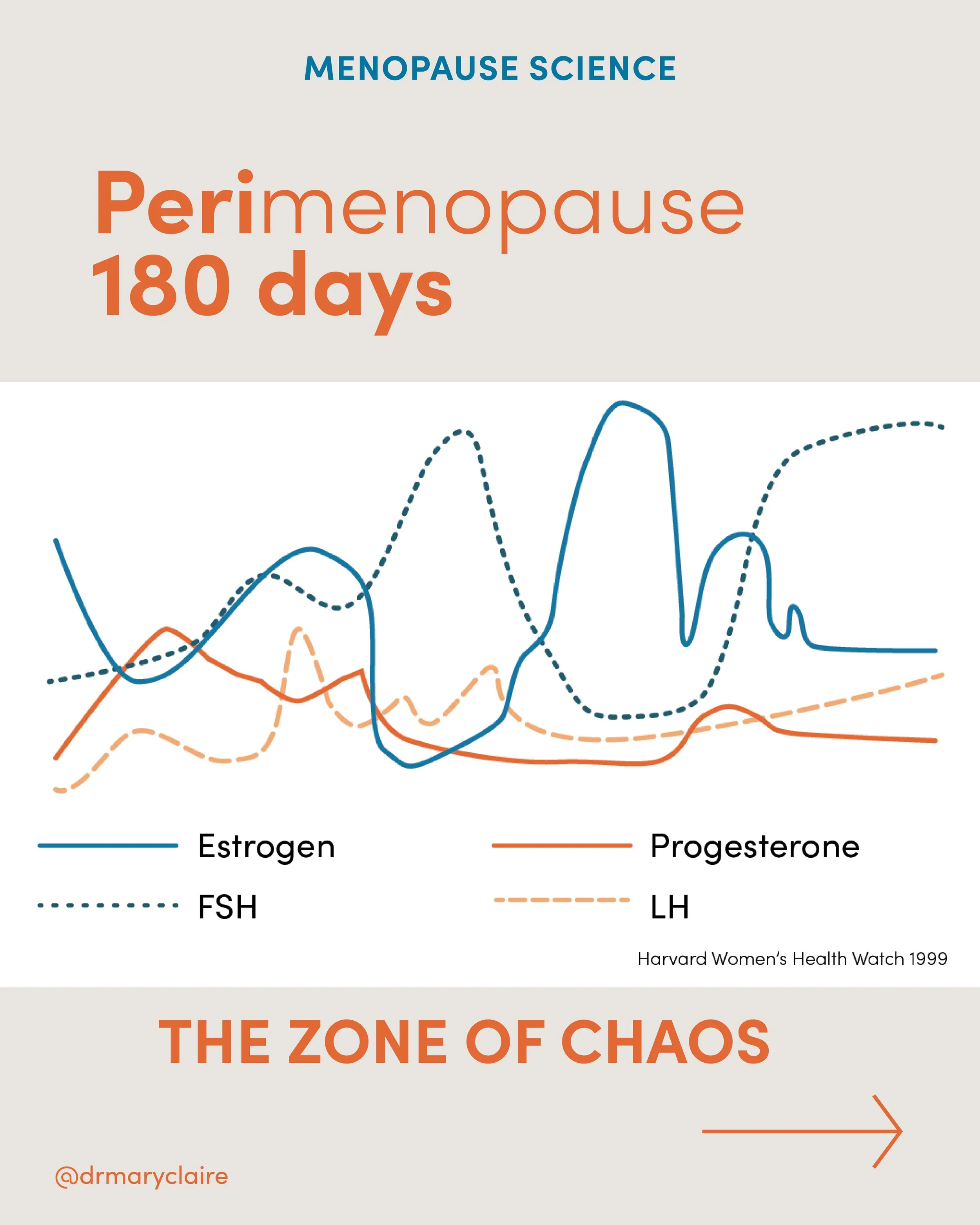
Another sidenote: you may not need bloodwork in your case. In perimenopause, labs are really just a snapshot of that exact moment in time, because your hormones are constantly fluctuating. BUT it can give them some insight. For most of a woman’s life, her cycle follows this nice, predictable curve. But once you’re running low on eggs and perimenopause kicks in? That curve starts to look like a piece of art drawn by a kindergartener. It’s all over the place and not following any sort of consistent pattern. However, if you happen to get bloodwork at a certain point in your cycle, it can show a practitioner that your levels are higher or lower than expected. So it can be helpful . . . but it might not be necessary right out of the gate. A well-informed practitioner — one who actually listens and doesn’t dismiss you — can absolutely start with your symptoms and treat from there.
The first thing she noticed was that my testosterone was basically on empty. Which, turns out, is pretty common for women who’ve been on birth control for most of their lives (hi, it’s me). Testosterone naturally declines as we age, but birth control tends to speed up that process. So that’s where we started. Low and slow. This alone was a game changer for me. I use a cream every morning. And while it took about 2–3 months to really feel the effects, I’d say it fully peaked around the 4-5 month mark.
Also, can we normalize the fact that men are not the only ones who need testosterone. Women need it too . . . just in much smaller amounts.
Testosterone supports:
Energy
Mood and emotional balance
Endurance
Motivation
Sex drive
Muscle mass and strength
Bone density
Cognitive function and clarity
Red blood cell production
Stress resilience
Metabolic health
Fat distribution
Recovery and repair
Hair and skin health
The second thing she noticed was that my progesterone was lower than it should’ve been at that point in my cycle. So I started taking bioidentical progesterone at bedtime. Low and slow again — just 50 mg. Shortly after I started it, I had a long chat with another dear friend, Ashley — she’s a nurse practitioner who works with women in menopause and perimenopause. What started as a “let’s catch-up!” call quickly got hijacked by talks of hormones. The Universe put us together at the right time because that conversation was another turning point in my journey. Ashley was my other little perimenopause angel! She validated everything I’d been experiencing and gave me advice I had not heard yet. She suggested I switch to dissolveable, bioidentical troches. Now these worked faster! I bumped up to 100mg around week 3 and really started to noticed a difference. But just like the testosterone, the effects continued to build and get better over time.
Progesterone is often called your “calming hormone” because it promotes relaxation, supports sleep, and stabilizes your mood. It acts like a natural anti-anxiety agent by supporting GABA receptors in the brain. Once this really started working with the testosterone, I could feel the shift. I was finally on the upswing.
Progesterone supports:
Sleep quality
Nervous system regulation
Anxiety
Brain fog
Mood stability
Stress management
PMS reduction
Anti-inflammatory effects
Cycle rhythm and predictability
Breast tissue balance
Endometrial (uterine lining) protection
Fluid balance
Pregnancy support
Now, there’s a lot of debate around hormones, and I’m not here to tell you what you should or shouldn’t do. That’s a conversation to have with your doctor (ideally a perimenopause specialist, please). But I can tell you this with absolute certainty: they saved my life. And I’m not exaggerating. It’s also important to understand that you’re not taking massive amounts. You’re taking just enough for your body to recognize the signal again . . . to remember what it’s supposed to feel like.
Because here’s the thing: A woman’s body has hormone receptors all over it.
Brain
Heart
Blood vessels
Skin
Muscles
Joints
Bladder
Bones
Reproductive organs
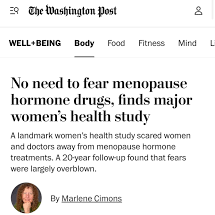
If your hormones are dysregulated, it affects all of these areas. These systems rely on hormonal signals to function properly. This is pertinent information. When that signaling gets disrupted, things start to feel off. And here’s where it gets wild — because as that podcast explains, there was an entire generation of women who were told hormones were dangerous and caused cancer. They were essentially scared out of taking them based largely on Women’s Health Initiative. What we now know is that study was deeply flawed and widely misinterpreted. And it shaped decades of fear and under-treatment. The FDA recently had to remove the black box warning of cancer because the evidence is irrefutable. It is (in my opinion) one of the greatest injustices in women’s health.
Meanwhile, that same generation of women, left without adequate hormonal support, experienced higher rates of:
Heart disease
Osteoporosis and bone fractures
Alzheimer’s and Dementia
Urinary incontinence and reoccurring UTIs
Sexual dysfunction and vaginal atrophy
Sleep disorders and insomnia
Inflammation (which we now know chronic inflammation is super dangerous)
Joint pain
Skinning thinning and accelerated aging
Hair thinning/loss
Insulin resistance and weight gain
Once you reach postmenopause, your body is no longer producing estrogen, progesterone, and testosterone in the same way it once did. Production shifts to the adrenal glands and peripheral tissues — but at levels that are significantly lower than what your body needs to operate efficiently. So ladies, when hormones like estrogen, progesterone, and testosterone decline, your hormone receptors are still there, AND they’re no longer getting the level of support they were designed to run on. Over time, those systems begin to slow down, weaken, and become more vulnerable to dysfunction. Our bodies rely on these hormones to regulate, protect, repair, and keep everything functioning optimally — from our brain and bones to our heart and nervous system.
I hate to think about how many women suffered unnecessarily — and how so many still are. But we don’t have to. We can be the generation that stays strong and supported. We don’t have to become frail and fragile. Now I’ll get off my soapbox and leave you to do your own hormone research. I just ask you to remain open to all the exciting new data that’s recently come to light. Dr. Mary Claire Haver is a wonderful resource. She’s on the forefront for all things related to the health of perimenopausal and menopausal women.

Here are my 3 main points:
1. If you’re in the age range for perimenopause (late thirties to mid 50s) and you’re suffering, you are not alone. This is something every woman who is lucky enough to live this long will experience. Reach out to me, open the dialogue with your friends, deep dive on social media, pick up a book, or find a community.
2. You must be your own advocate for your health. There are women on the front lines fighting for doctors to catch up to the current research that’s out there. Sadly enough, it’s not required for them to educate themselves on this topic. So if one doctor dismisses you, go find one who won’t. You must be in charge of your health because only you really know what you’re experiencing.
3. If you do decide to go the hormone replacement route and you feel like you’re still not 100%, I urge you to keep looking. Perimenopause can exacerbate so many other issues and bring them to the forefront so you’re forced to look at them. What else could be going on? Take the research into your own hands and figure this out. I assure you no one will do this part for you.
Number 3 is so important to understand. So many women think that taking HRT (hormone replacement therapy) is going to be the only answer, but that might not be the case for you. Perimenopause can exacerbate underlying issues that were once mild, manageable, or completely under the radar. All of a sudden, things that never bothered you before are now a problem. HRT helps bring your body back to a baseline where you can actually think clearly, feel like yourself again, and have the capacity to address what else might be going on. Because when your hormones are dysregulated and your body is chaos, everything gets amplified and you can’t accurately assess what else needs your attention.
The perfect segway: So where am I now? The hormones got me to a much better place — like, almost all the way home. I could think clearly again. I was sleeping better. I felt more present and more patient. I wasn’t riddled with fatigue and irritability. I wasn’t snapping on loved ones. However, there was still something else that didn’t feel quite right. But at this point, I knew my body well enough to recognize that it wasn’t hormonal.
Since I am relentless, I kept searching for answers. That’s when I discovered I have one copy of the MTHFR gene mutation. And this opened another damn can of worms. As it turns out, this can be exacerbated during perimenopause (because of course it can). So even though my hormones were coming back into balance, I was still dealing with a layer of symptoms that weren’t being addressed.
Now explaining this “other thing” for me — the MTHFR gene mutation — fully is a whole conversation in itself. But once I started taking the right supplement to support it, I literally had the thought, “Wait, bitch . . . am I back?!” I swear it was the final piece of my health puzzle. So tune in because this is what the next blog is about. And guess what? You don’t have to wait to read it because it’s already out.
Podcast Recommendation:
The Peter Attia Drive — Episode #348
“Women’s Sexual Health, Menopause, and Hormone Replacement Therapy (HRT)” with Rachel Rubin, M.D.
Looking for a perimenopause or menopause specialist?
Visit The Menopause Society at menopause.org
Click “Find a Healthcare Practitioner” at the top
Enter your zip code
Browse qualified providers in your area